goal
To identify how to make Desire2Learn’s Learning Management System the most inclusive option available to schools.
I owned the strategy and directed design execution for this program.
Context
I was tasked to work with a collation of Desire2Learn’s customers who were accessibility advocates. When I started, Desire2Learn was in the middle of a UI refresh, so it was an ideal time to incorporate accessibility improvements. We just needed to develop a deep understanding of what a good experience for people with disabilities looks like.
At the time, there were few experimental examples for making web applications fully accessible, all created by people working on standards committees.
Approach
Most companies take a quality engineering approach to accessibility. I am a UXer – so I took a user-centered approach.
I partnered with client schools to observe first-hand how people with disabilities interacted with the platform. Interpretation of results was one of my biggest challenges: Not all of the problems observed were necessarily issues with the product. Sometimes assistive technology glitches impacted task performance. To be able to better understand what I was observing, I taught myself how to use several assistive technologies, including screen readers.
I applied what I learned to the design of the platform. My work spanned everything from information architecture, design patterns to microcopy and micro-interactions. I created inclusive design patterns. I also worked with a technical writer to create a guide to help people who are blind develop an accurate mental model of the system.
Example: Non-visual design of course builder
A good example of my inclusive design work is the non-visual design of Course Builder. Course Builder is a drag and drop interface for sequencing course materials. The non-visual experience was particularly challenging to design because there weren’t established patterns at the time for inclusive, dynamic web-applications. Accessibility guidelines at the time were focused on static document features.
The diagram below highlights some of the features I designed.
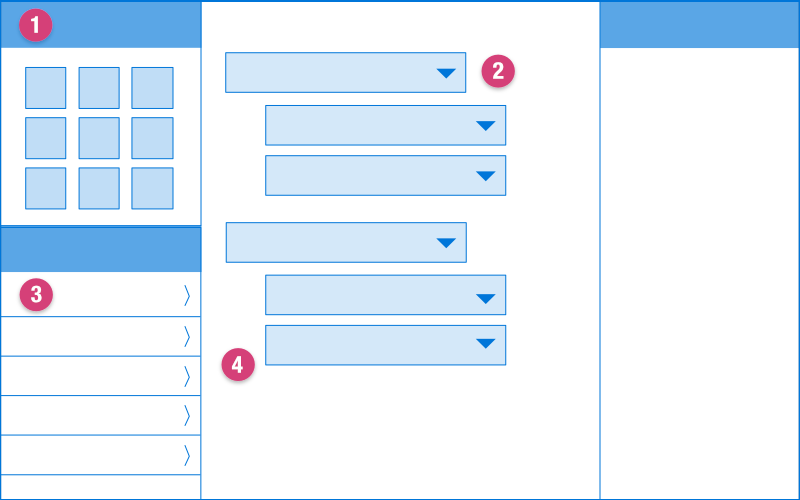
- I decided to add headers to enable people to efficiently move between the major application sections. Some of these were visible to all users. Some were hidden. (This was before landmarks were a thing.)
- Drag and drop was a particular challenge. After much consideration and discussion with end-users, I decided to make an alternative, but equally effective method to move items: Cut and paste. This decision was beneficial to all assistive technology users.
- Carefully controlled cursor focus and purposeful semantic markup helped people who are blind understand the novel drill-in menu component.
- The course structure used nested list markup to help users orient themselves.
Outcomes
The relationship that I developed and maintained with the expert group gained the company a very strong reputation within the larger accessibility community.
“..It is a very gratifying collaboration, and one that I think is virtually unique for a commercial company in the LMS space.”
Director, the Ohio State University
Desire2Learn received multiple high profile recognitions for inclusive design. I was invited to contribute a case study about the program to the book “Ensuring Digital Accessibility Through Process and Practice“. This was featured alongside Apple and Oracle.
We got the top award from the US National Federation of the Blind – the Jacob Bolton Award. Other award winners include Ray Kurzweil and Apple.
Desire2Learn was the second company, after Target, to be invited to be a strategic partner of the NFB.
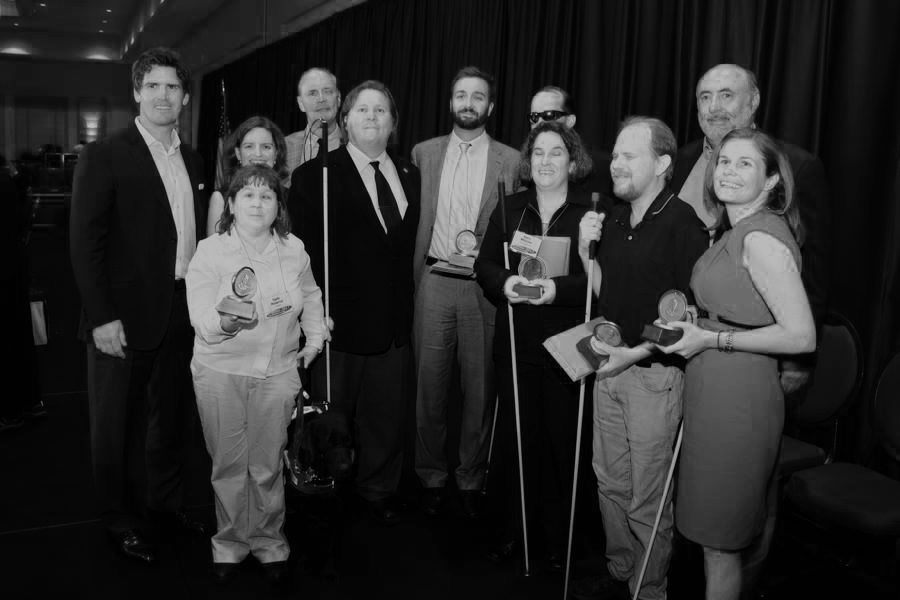
“The company has earned this award not only by its technical achievements in the area of accessibility, but also by its true commitment to serving all of its customers equally, including those who are blind.”
– Dr. Mark Maurer, President National Federation of the Blind 2013
I have delivered many conference presentations on the topic of accessible user research and design – including at Fluxible and at TedX UWaterloo.